What Are You Looking For?
What Are You Looking For?


Silicone rubber prices do not move in isolation. They reflect changes in raw-material costs, energy prices, logistics, and demand across industries ranging from automotive and electronics to healthcare and construction. For buyers of automotive silicone hoses, fuel cell coolant lines, turbocharger hoses, and custom-molded silicone components, understanding these drivers helps explain why quotations may vary over time and why long-term planning matters.
What is changing in the silicone rubber market?
In September 2026, silicone rubber prices moved upward across major producing regions. Market data shows that dimethyl polysiloxane (DMC), a key silicone intermediate, rose approximately 6.5% over a ten-day period in mid-September, with some grades gaining more than 13% compared to late August levels. Several factors are contributing to this environment:
Feedstock and energy costs. Silicone rubber is derived from silicon metal and various petrochemical intermediates. Rising methanol and industrial silicon prices in September increased production costs for silicone monomers and compounds. Fluctuations in electricity prices, industrial gas costs, and key chemical feedstocks directly affect production expenses for compounders and extruders.
Capacity and supply chain constraints. Global demand for high-performance elastomers has been growing, particularly in automotive thermal management, electric vehicles, and electronics. When demand rises faster than available compounding and extrusion capacity, lead times extend and price pressure increases.
Logistics and regional dynamics. Ocean freight rates, container availability, and regional manufacturing shifts continue to influence delivered costs. Even if factory-gate prices are stable, changes in freight, insurance, and customs can alter the final landed price of silicone hose assemblies.
Quality and specification requirements. Not all silicone compounds are equivalent. Automotive-grade, fuel cell–grade, and food-contact silicone involve different formulations, testing, and documentation. As applications demand higher purity, lower extractables, or specific flame ratings, the cost structure naturally shifts.
For hose buyers, these factors mean that a price valid today may not automatically apply six or twelve months from now unless the underlying assumptions remain unchanged.
Why this matters for silicone hose buyers
Since 2009, RAINBOW has focused on the design and manufacture of performance silicone hoses and molded silicone components. Our customers operate across a range of industries — from automotive systems and hydrogen fuel cell vehicles to railway rolling stock, shipbuilding, agricultural machinery, electronics, mechanical equipment, and home healthcare devices. Across all of these sectors, the same fundamental challenge applies: when upstream silicone material costs shift, the impact on hose pricing and project budgets can be significant.
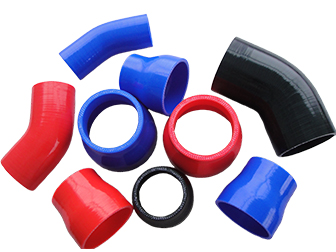
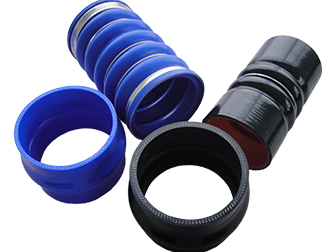
In these applications, silicone hose pricing is influenced not only by the base polymer but also by:
Reinforcement materials. Polyester, aramid, or other fiber layers add cost but are essential for pressure capability, dimensional stability, and long-term durability.
Lining and compound selection. Fluorosilicone, FKM, or low-extractables silicone compounds carry different price levels than standard high-temperature silicone.
Geometry and complexity. Custom-molded hoses with multiple bends, varying wall thickness, or integrated features require more engineering time, tooling, and quality checks than simple straight lengths.
Testing and documentation. Projects that require material certificates, dimensional reports, pressure or burst tests, flame ratings, or traceability naturally involve more resources.
While DMC is one component of the total hose cost, its price movement is one of several factors that influence our production costs. The actual impact on finished hose pricing depends on the specific construction, and we are happy to discuss this on a project-by-project basis.
When raw-material markets shift, these cost components may not all move in the same direction or at the same speed. That is why transparent communication between supplier and buyer is important.
How RAINBOW monitors upstream material trends
As an ISO 9001–certified manufacturer, RAINBOW tracks upstream material developments through multiple channels: compound supplier updates, regional price reports, logistics indicators, and feedback from production planning. This does not mean we can predict every price movement, but it allows us to:
For customers with annual agreements, we provide quarterly material cost reviews upon request. For existing customers, this background is useful when reviewing annual budgets, forecasting project costs, or evaluating whether a fixed-price period or a structured price-review mechanism makes more sense for your program.
Options for managing price volatility
Depending on your project stage and annual volumes, several approaches can help manage silicone hose cost variability:
Framework agreements with price-review clauses. A yearly or multi-year agreement can define base prices, review points, and adjustment mechanisms linked to raw-material or logistics indices. This provides predictability while keeping flexibility for significant market changes.
Volume-based pricing tiers. When annual quantities are clear, it is often possible to structure pricing in tiers that reflect production efficiency and material purchasing scale.
Early design involvement. Sharing drawings, operating conditions, and performance targets at the concept stage allows us to propose cost-effective constructions, avoid over-specification, and reduce late changes that affect tooling and validation.
Standardization where feasible. For programs with multiple hose variants, aligning dimensions, reinforcement levels, or fitting interfaces can simplify production and reduce unit costs over time.
These options work best when both sides share realistic demand forecasts and technical requirements.
What buyers should consider now
If you are evaluating silicone hose suppliers or planning upcoming projects, the following information helps us provide meaningful quotations and technical recommendations:
With this information, we can assess feasible constructions, identify potential cost drivers, and discuss whether a fixed-price period or a structured price-review mechanism makes more sense for your program.
A transparent approach to long-term cooperation
Market updates like this one are intended to support informed decision-making, not to justify price changes without context. RAINBOW's goal is to maintain stable supply, consistent quality, and clear communication throughout the product life cycle. When raw-material conditions change, we aim to explain the drivers, explore design or process optimizations where possible, and agree on a commercially sustainable path forward.
If you would like to discuss the impact of current market conditions on your silicone hose projects, we welcome you to reach out. Share your project details, operating conditions, target standards, and estimated quantities, and our team will provide a clear assessment of feasible constructions and a pricing structure aligned with your project horizon.
Looking For A Reliable Business Partner For Your Next Project?

Business Enquiries
+86 15160066997