
What Are You Looking For?
What Are You Looking For?

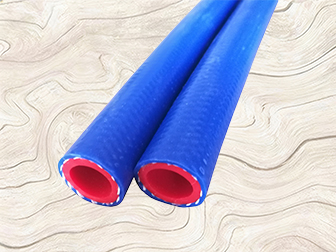
Choosing a hose for an automotive cooling system involves more than matching its diameter. Heater hoses and radiator hoses both carry coolant, but they connect different components and serve different roles. Similar materials or dimensions do not automatically make them interchangeable.
A silicone heater hose carries coolant through the vehicle’s heating circuit. A radiator hose carries coolant between the engine and radiator. Understanding what these names describe—and what they do not—helps explain why similar-looking hoses may have different requirements.
This guide explains their different roles, why silicone is used for heater hoses, and how to interpret temperature ratings and reinforcement details.
Key Takeaways
What Is a Silicone Heater Hose Used For?
In an automotive heating system, a silicone heater hose carries hot coolant between the engine cooling circuit and the heater core. Its silicone compound and reinforcement must be suitable for the coolant, operating temperature and pressure, and installation layout.
The heater core is a small heat exchanger. Hot coolant passes through it, transferring heat to air directed into the passenger compartment. A supply hose carries coolant to the core, and a return hose carries it back into the cooling circuit.
The layout varies by vehicle. Some systems include control valves, branched connections, or other components that affect coolant flow and routing. Connection sizes, bend geometry, and available space also differ.
Although the heater hose supports cabin heating, it remains part of the coolant system. “Coolant hose” is therefore a broader description, while “heater hose” identifies a particular application within that system.
Silicone Heater Hose vs. Radiator Hose: What Are the Differences?
The main difference is where each hose is used and which components it connects.
A heater hose serves the heater core circuit. A radiator hose serves the main radiator circuit, where heat is transferred from the coolant to the surrounding air.
Radiator hoses can be made from different materials. To keep the comparison focused, the table below looks at silicone versions of both hose types.
| Comparison | Silicone Heater Hose | Silicone Radiator Hose |
| Components connected | Engine cooling circuit and heater core | Engine and radiator |
| Primary role | Carries coolant through the cabin-heating circuit | Carries coolant through the main radiator circuit |
| Installation considerations | Heater core connections, routing space, bends, and nearby components | Engine and radiator connections, hose geometry, clearance, and component movement |
| Construction | Selected for the heating-circuit application | Selected for the radiator-circuit application |
| Temperature and pressure ratings | Depend on the specific product and operating conditions | Depend on the specific product and operating conditions |
Within SAE J20, 20R3 covers normal-service heater hose, while 20R4 covers normal-service radiator hose. These designations provide useful context, but they are only part of a complete specification.
The names alone do not establish wall thickness, reinforcement type, pressure rating, or flexibility. A feature found in one heater hose should not be assumed to apply to every heater hose, and the same principle applies to radiator hoses.
Can They Be Interchanged?
Not simply because they share a diameter or silicone construction.
A replacement must match the connection geometry, routing, coolant compatibility, temperature requirements, and pressure conditions. Where suction or tight bends are involved, collapse and kink resistance may also matter.
The relevant question is not whether the hoses look similar, but whether the replacement meets the requirements of the installation.
Why Is Silicone Used for Heater Hoses?
Silicone is used for heater hoses because appropriately formulated compounds offer a broad service-temperature range, flexibility, and resistance to environmental aging.
These advantages do not make every silicone hose suitable for every heating circuit. Performance depends on the compound, reinforcement, and finished hose design.
Temperature Capability and Thermal Cycling
Heater hoses experience changing temperatures as an engine starts, warms up, operates, and cools down. A suitable silicone hose can retain flexibility across a broad temperature range and accommodate repeated heating and cooling.
The complete construction matters, however. The silicone compound, reinforcement, and bonding must all withstand the relevant conditions.
Heat resistance is a shared advantage, not a defining difference between silicone heater hoses and silicone radiator hoses. Both can use silicone constructions intended for elevated-temperature environments.
Resistance to Environmental Exposure
Ozone, weathering, and heat can contribute to hose aging. Resistance to these influences is one reason silicone is used in vehicle environments.
Environmental resistance should not be confused with universal chemical resistance. A hose that resists ozone may still be unsuitable for a particular oil, fuel, or coolant formulation.
Flexibility and Reinforcement
Flexibility helps a hose accommodate its intended routing and normal component movement. Reinforcement supports the hose structure under the specified operating conditions.
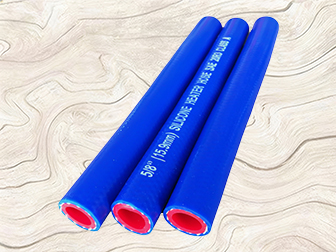
For example, a silicone heater hose may use integrated polyester braid reinforcement. Other products may use different reinforcement materials or arrangements.
Layer count alone does not establish performance. Reinforcement material, braid or fabric arrangement, wall construction, hose diameter, and bonding all influence the finished product.
How Should Silicone Heater Hose Temperature Ratings Be Interpreted?
A temperature range is useful only when its meaning is understood.
A published range may refer to continuous service, intermittent exposure, or performance under defined test conditions. These are not necessarily equivalent.
When interpreting the rating of a high-temperature silicone heater hose, consider the following:
Coolant temperature is only one source of heat exposure. Nearby exhaust components can add radiant heat, while direct contact with hot surfaces can create localized heating.
A published maximum temperature should not be assumed to apply continuously under all operating conditions. It also does not establish pressure capability, coolant compatibility, or expected service life.
What Determines Whether a Silicone Heater Hose Is Suitable?
Suitability depends on how the hose works within the complete system, not on one headline specification.
Dimensions and Routing
Inside diameter affects fit at the connection. Outside diameter, wall thickness, and length influence clamp selection, clearance, and installation.
For formed hoses, bend angles, bend radius, and connection orientation are also important. A hose can match the connection diameter yet still be unsuitable if installation forces it into a tight bend or places continuous tension on the connections.
The routing should avoid kinking, abrasion, and unintended contact with nearby components.
Coolant Compatibility
Coolant formulations and additive packages vary. The description “silicone hose” does not confirm compatibility with every conventional or extended-life coolant.
Compatibility depends on the compound, hose construction, coolant formulation, temperature, and exposure duration. A change in hose material or coolant chemistry therefore requires more consideration than a dimensional check.
Pressure and Vacuum Conditions
Temperature and pressure requirements must be considered together. A room-temperature pressure rating does not necessarily describe performance at elevated temperature.
Some installations may also expose a hose to suction or changing pressure conditions. Where relevant, the hose must resist excessive deformation or collapse.
Neither wall thickness nor reinforcement layer count is a substitute for applicable performance data.
Connections and Installation
The hose, fitting, and clamp form a connection system. Their dimensions and mechanical behavior must work together.
Incorrect clamp selection, excessive tightening, poor alignment, or inadequate engagement can compromise a connection even when the hose material is suitable.
This is another reason a hose should not be considered a direct replacement solely because its nominal inside diameter matches.
Common Misconceptions About Silicone Heater Hoses
“Every Silicone Hose Is Suitable for Heater Service”
Silicone identifies a material family, not a complete application specification. A hose intended for air transfer or another purpose should not automatically be assumed suitable for hot coolant service.
“Silicone Heater Hose Is Automatically an Upgrade over EPDM”
Silicone and EPDM are different material options with different characteristics. Replacing one with the other requires consideration of coolant compatibility, connections, temperature, pressure, and vehicle requirements.
Changing the material alone does not establish better performance.
For examples of silicone heater hose constructions, reinforcement options, and stated temperature ranges, explore the silicone heater hose product range from Rainbow Manufacturing.
Frequently Asked Questions
Is a Heater Hose Also a Coolant Hose?
Yes. In an automotive heating system, the heater hose carries engine coolant through the heater core circuit. “Coolant hose” is the broader description, while “heater hose” identifies a particular use.
Can a Silicone Heater Hose Replace a Radiator Hose?
Not based on material or diameter alone. A replacement must meet the installation’s geometry, fluid compatibility, temperature, pressure, and other applicable requirements. The product names do not establish interchangeability.
Is Silicone Heater Hose Oil Resistant?
Standard silicone should not automatically be considered suitable for prolonged contact with petroleum-based oils or fuels. Resistance depends on the compound and hose construction. Suitability for coolant service does not establish suitability for oil service.
Does a High Temperature Rating Mean the Hose Can Handle High Pressure?
No. Temperature capability and pressure resistance are separate characteristics, although operating temperature can affect pressure performance. Both must be assessed under the relevant service conditions.
Can a Silicone Heater Hose Replace an EPDM Heater Hose?
It may be suitable in some applications, but matching dimensions is not enough. The replacement must also meet coolant compatibility, connection, routing, temperature, pressure, and applicable vehicle requirements.
Looking For A Reliable Business Partner For Your Next Project?

Business Enquiries
+86 15160066997