
What Are You Looking For?
What Are You Looking For?
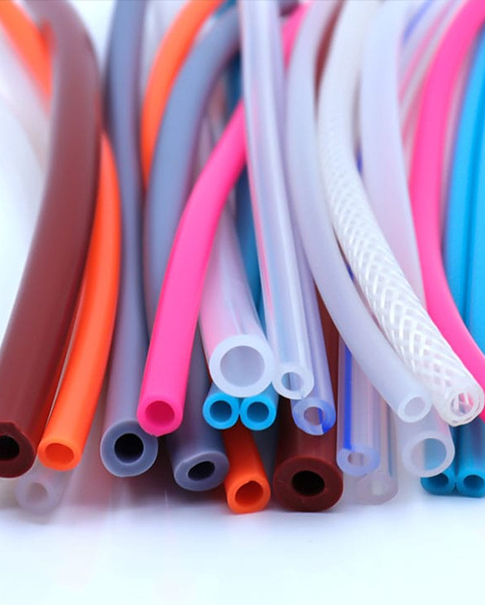

Silicone hoses are used in automotive systems, industrial machinery, thermal management equipment, and other applications where flexibility and temperature resistance are important. However, the requirements of one installation can differ considerably from those of another. Some hoses must withstand elevated temperatures and pressure fluctuations, while others need complex shapes, specialized inner linings, or precise connections to fit into restricted spaces.
For OEM engineers and purchasing teams, choosing the right hose involves more than comparing dimensions and material descriptions. The hose construction, reinforcement, operating environment, and manufacturing process must work together to deliver the required performance.
A special use silicone hose is developed for applications that need specific characteristics beyond those of a conventional hose. These may include aramid reinforcement, custom geometry, specialized material layers, or application-specific dimensions.
This guide explains how to evaluate these options, when high-temperature aramid reinforcement may be appropriate, and what to look for when selecting a silicone hose manufacturer for custom projects.
A special use silicone hose is designed around the requirements of a particular application rather than a single standard configuration. Depending on the intended use, its construction may be adapted to address thermal exposure, mechanical stress, fluid compatibility, installation constraints, or other technical requirements.
Common design considerations include:
Not every special-use hose needs all these features. The appropriate combination depends on the system's actual operating conditions.
Silicone provides flexibility and useful thermal and environmental properties, but the performance of a finished hose also depends on its reinforcement, wall thickness, material formulation, and manufacturing quality.
For example, a hose operating under internal pressure may require reinforcement to help control expansion. A hose routed around several engine components may need a molded elbow or reducer to avoid excessive bending. An application involving aggressive fluids may require a specialized inner lining rather than conventional silicone alone.
These are different engineering challenges, and they should be addressed separately during product selection.
RAINBOW Manufacturing offers silicone hose solutions for automotive and industrial applications, including customized designs. Buyers can explore the available options through the RAINBOW website.
High-temperature environments often place multiple demands on a hose. In automotive systems, for example, a component may experience heat, pressure changes, engine vibration, and limited installation clearance at the same time.
A high temp aramid reinforced silicone hose combines a silicone hose body with aramid-fiber reinforcement. This construction may be suitable when an application requires thermal performance alongside additional mechanical support.
Aramid fibers are valued for their strength-to-weight characteristics and heat resistance. When incorporated into a suitable hose design, they help reinforce the structure and control deformation under operating loads.
The silicone compound provides the flexible body, while the reinforcement contributes structural support. The resulting performance depends on several factors, including the weave pattern, reinforcement layers, silicone formulation, wall dimensions, and manufacturing process.
RAINBOW's High Temp Aramid Reinforced Silicone Braided Hose is an example of this construction. The product page describes a double-layer aramid weave and identifies flexibility, pressure resistance, and environmental resistance among its features.
When evaluating a reinforced hose, buyers should distinguish between the material's general characteristics and the finished product's verified operating limits. Reinforcement alone does not establish a specific pressure rating, service life, or maximum continuous temperature.
Depending on the product specification, aramid-reinforced silicone hoses may be considered for:
Automotive air systems: Applications exposed to elevated temperatures, pressure variations, and engine vibration.
Turbocharger and charge-air systems: Connections where the hose must accommodate thermal exposure and internal pressure.
Industrial equipment: Air-transfer and other suitable systems that combine heat with mechanical demands.
Specialized machinery: Equipment requiring a flexible connection with a reinforced structure.
The hose must still be matched to the transported medium. A high-temperature silicone hose is not automatically suitable for continuous exposure to petroleum fuels, oils, or every industrial chemical.
Before selecting an aramid-reinforced design, establish the continuous operating temperature, short-term temperature peaks, normal and maximum working pressure, pressure cycling, bend radius, and connection requirements.
Ask the manufacturer to confirm which operating limits apply to the finished hose and whether test documentation is available for the intended application.
Standard hose configurations can be suitable for straightforward connections, but OEM equipment frequently presents more complex requirements. Limited space, different connection diameters, unusual routing, and nearby components may make an off-the-shelf hose difficult to install.
Custom silicone hoses allow the dimensions, geometry, reinforcement, and material construction to be selected around the application.
Depending on the design, a custom hose may include:
Correct geometry matters because excessive bending, twisting, or stretching can introduce unnecessary stress. A well-matched hose can also make assembly and maintenance more straightforward.
RAINBOW's high-temperature custom silicone turbo hose illustrates the use of customized configurations for automotive applications. Buyers can discuss their own dimensions and design requirements rather than assuming that one standard shape will suit every installation.
Customization can extend beyond the external shape. Depending on the intended application, manufacturers may evaluate different reinforcement materials, silicone formulations, or specialized inner layers.
Aramid and polyester reinforcement, for example, have different characteristics and should be selected according to the required performance. Wire reinforcement may be considered for certain vacuum or shape-retention applications.
For systems exposed to oils, fuels, or other demanding media, a specialized lining may be necessary. In these cases, the compatibility of the inner layer is particularly important because the transported medium directly contacts it.
The best configuration is not necessarily the most complicated one. It is the construction that meets the requirements without introducing unnecessary cost or manufacturing complexity.
To help a manufacturer assess feasibility, provide as much of the following information as possible:
These details help the manufacturer identify potential design issues before sampling and production.
Choosing a hose requires a complete view of the operating environment. A high temperature rating alone does not establish suitability for a pressurized system, and a reinforced construction does not guarantee compatibility with every fluid.
A hose may operate at a relatively stable temperature for extended periods while experiencing occasional temperature peaks. These conditions should be specified separately.
Prolonged exposure beyond the intended operating range can accelerate material degradation. Repeated heating and cooling may also affect the hose and its connections over time.
When comparing high-temperature silicone hoses, confirm the continuous operating limit and any applicable intermittent exposure limits. Consider both the temperature of the transported medium and heat from nearby components.
Internal pressure places stress on the hose wall and may cause expansion. Reinforcement can help control deformation, but pressure capability depends on the complete construction.
Connections also matter. Incorrect clamp selection, poor alignment, or unsuitable insertion depth can lead to leakage or hose displacement, even when the hose itself is appropriate.
For pressurized applications, ask the manufacturer for the applicable working-pressure specifications and clarify the conditions under which they were established.
Silicone hoses are commonly used in suitable air-transfer and cooling applications, but silicone is not universally compatible with every fluid.
Continuous contact with petroleum fuels or oils can be problematic for conventional silicone. Depending on the medium and operating conditions, a specialized compound or fluororubber lining may be necessary.
Provide the exact fluid name and operating conditions when requesting a quotation. General descriptions such as "oil resistant" or "chemical resistant" are not sufficient to establish compatibility with every substance.
A hose should follow its intended route without excessive twisting, stretching, or compression. Tight bends may create local stress or affect flow, depending on the hose design.
In vibrating equipment, consider how movement transfers to the hose and its connections. Routing, support points, connection design, and reinforcement should be evaluated as parts of the same assembly.
These terms describe different aspects of hose selection. Aramid reinforcement refers to the construction, while custom manufacturing refers to adapting the product to a particular application.
| Consideration | Aramid-reinforced silicone hose | Custom silicone hose |
|---|---|---|
| Main focus | Reinforcement for specified mechanical demands | Application-specific dimensions and configuration |
| Material construction | Silicone with aramid-fiber reinforcement | Depends on the selected material and reinforcement |
| Geometry | Depends on the product design | May be developed from drawings or samples |
| Key questions | What are the pressure and temperature requirements? | What shape, dimensions, and materials are required? |
| Typical sourcing need | A reinforced structure suited to demanding conditions | A hose that does not fit standard dimensions or layouts |
The two options are not mutually exclusive. A custom silicone hose can also incorporate aramid reinforcement when the application calls for it.
For purchasing teams, the most useful comparison is based on operating requirements, product specifications, and the feasibility of the proposed construction.
Choosing a suitable silicone hose manufacturer is an important step in controlling product consistency, technical suitability, and procurement risk. A supplier should be able to understand the application and explain how the proposed construction addresses its requirements.
Ask whether the manufacturer can produce the required geometry, reinforcement structure, and material combination. If your design includes unusual bends, multiple diameters, or specialized linings, confirm these requirements early.
Review relevant product examples, available manufacturing processes, and the supplier's approach to evaluating new designs.
A quotation based on incomplete specifications may overlook important application constraints. Provide drawings and operating details, then discuss any questions about material selection, geometry, and manufacturing feasibility.
For a new design, agree on sample approval criteria before mass production. Depending on the application, these may include dimensional inspection, connection fit, visual quality, and relevant performance tests.
Ask which quality-management certifications, product test reports, or industry standards are relevant to the proposed hose. Verify that the documentation applies to the specific product and intended use.
Do not assume that a certification or test report covering one product category automatically applies to every hose made by the same manufacturer.
Unit price is only one part of the purchasing decision. Tooling, material selection, order quantity, inspection requirements, packaging, and lead time may all affect the total cost.
A clear specification also makes quotations easier to compare. Provide the same drawing revision, operating conditions, quantity, and acceptance criteria to each supplier.
RAINBOW Manufacturing provides customized silicone hose solutions for different automotive and industrial applications. Buyers can review the company's product catalog and contact the team to discuss a particular hose design.
Before placing an order, use the following checklist to make sure the important requirements have been addressed.
Application
Mechanical requirements
Product specification
Purchasing and quality
This checklist can help engineers and procurement teams identify missing information before requesting quotations or approving samples.
A special use silicone hose is designed for an application requiring specific characteristics, such as high-temperature performance, reinforcement, specialized material layers, or custom geometry. The appropriate construction depends on the operating conditions.
Aramid reinforcement can provide additional mechanical support while retaining the flexibility associated with silicone hose construction. The actual performance depends on the finished hose design and its specified operating limits.
Yes. Manufacturers may use engineering drawings or physical samples to evaluate custom hose designs. Dimensions, materials, reinforcement, connection details, and operating conditions should be agreed upon before production.
Evaluate the manufacturer's relevant product experience, customization capabilities, technical communication, quality documentation, sample approval process, and ability to meet your specifications. Compare quotations using consistent requirements rather than price alone.
Conventional silicone hoses are not automatically suitable for continuous petroleum fuel or oil exposure. A specialized material or inner lining may be required. Always verify compatibility for the exact fluid and operating conditions.
Provide a drawing or sample, dimensions, transported medium, temperature and pressure requirements, reinforcement preferences, estimated quantity, and relevant quality or testing requirements. The more complete the information, the easier it is to evaluate a suitable design.
Selecting a special use silicone hose involves more than choosing a material or comparing temperature ratings. The hose must be appropriate for the operating environment, mechanical loads, transported medium, and installation geometry.
High-temperature aramid reinforcement may be useful where additional mechanical support is required, while custom silicone hoses provide flexibility in shape, dimensions, and construction. Evaluating these factors together helps engineers and purchasing teams make better-informed sourcing decisions.
RAINBOW Manufacturing offers silicone hose options for specialized applications, including aramid-reinforced and customized designs. If your project requires a custom configuration, visit www.rainbow-manufacturing.com to discuss your drawings, operating conditions, and production requirements with the team.
Looking For A Reliable Business Partner For Your Next Project?

Business Enquiries
+86 15160066997