
What Are You Looking For?
What Are You Looking For?
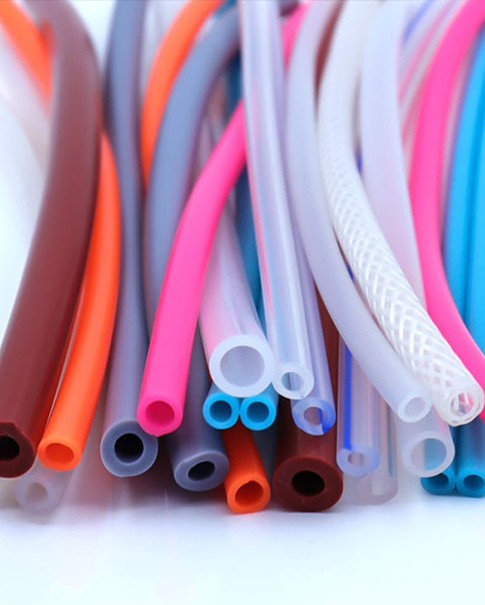

Hydrogen fuel cell systems operate under demanding thermal, chemical, and pressure parameters. As clean-energy technology advances, fluid-handling and thermal management components must meet rigorous performance standards. Standard off-the-shelf options often fall short when exposed to aggressive coolants, high heat, and continuous mechanical stress. Selecting the right silicone hose is a critical engineering step to ensure long-term durability, leak prevention, and system efficiency.
Standard silicone is widely praised for its flexibility, durability, and broad temperature tolerance. However, standard silicone is inherently porous. When exposed to oils, fuel mists, and specialized chemical coolants, raw silicone allows fluids to seep through the hose walls over time. In a fuel cell module—where fluid purity, leak prevention, and insulation are paramount—this permeation can lead to material degradation, reduced system pressure, and premature failure.
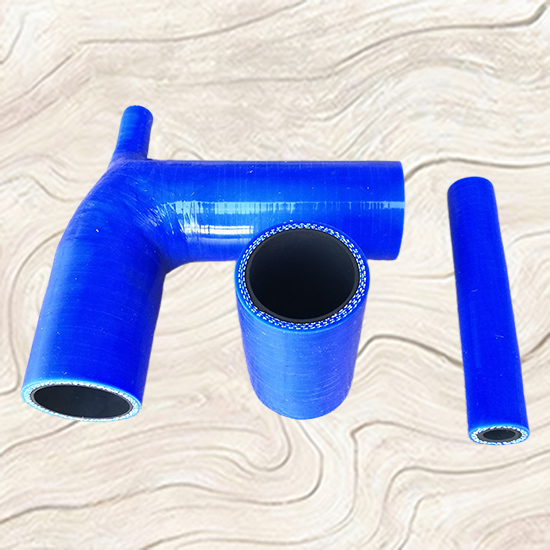
To solve the permeation problem, advanced hose designs utilize a dual-layer strategy. Look for hoses engineered with a specialized interior lining,they're bonded to a high-performance silicone exterior. The inner lining acts as an impenetrable chemical barrier against aggressive media, fuels, and coolants, while the outer silicone layer provides crucial flexibility, vibration damping, and resistance to environmental factors like ozone and UV radiation.
Fuel cell systems generate significant heat during continuous operation. The ideal hose must maintain structural integrity under extreme thermal fluctuations, operating reliably at temperatures up to 250°C (482°F). Furthermore, fuel cell cooling loops frequently rely on Organic Additive Technology (OAT) coolants and specialized rust inhibitors. Verify that the hose material has undergone rigorous testing against these specific coolant chemistries to prevent internal erosion, swelling, or chemical leaching that could contaminate the system.
Chemical resistance means little if a hose expands or bursts under operational pressure. For high-pressure fuel cell applications, choose hoses with multi-ply construction and aramid fiber reinforcement. Aramid braiding significantly increases burst pressure resistance and tensile strength, allowing the hose to handle continuous pressure spikes without sacrificing flexibility. Matching wall thickness and ply count to your operational needs ensures the hose won't collapse or fatigue under load.
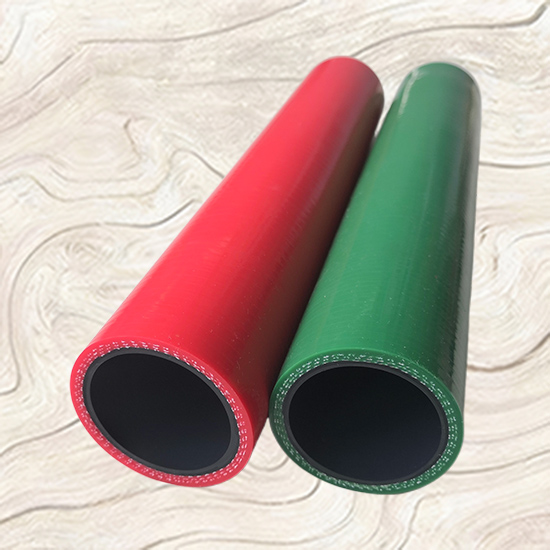
Hydrogen fuel cell layouts are often compact and complex, requiring custom lengths, precise inner diameters, or specialized multi-axis bends to avoid kinking. Ensure your supplier adheres to recognized industry standards such as ISO, SAE, or UL. Choosing certified, custom-molded hoses minimizes installation stress and guarantees exact fitting alignment, eliminating common failure points associated with forced standard connections.
Standard silicone is porous and susceptible to oil, fuel mist, and chemical coolant permeation. A Viton® (fluororubber) lining creates an impenetrable chemical barrier that blocks fluid seepage while the outer silicone shell retains high flexibility and environmental resistance.
Aramid fiber provides superior tensile strength and thermal stability at elevated temperatures (up to 250°C / 482°F) compared to standard polyester, ensuring the hose withstands high burst pressure without degrading or losing dimensional stability.
Yes. Viton-lined and fluorosilicone-lined hoses are specifically engineered and tested to resist OAT coolants and rust inhibitors, preventing coolant leaching and internal wall erosion during long-term operation.
System pressure and space constraints dictate ply construction: 2-ply is best for tight, low-pressure runs; 3-ply serves standard cooling circuits; and 4-ply+ is required for high-pressure, heavy-duty lines to prevent hose collapse or expansion.
Don't compromise clean-energy performance with off-the-shelf components. At Rainbow, we specialize in high-performance Viton®-lined and fluorosilicone-lined silicone hoses reinforced with heavy-duty aramid fibers. Engineered to withstand temperatures up to 250°C (482°F) and aggressive OAT coolants, our dual-layer hoses deliver zero fluid permeation, maximum burst pressure resistance, and uncompromising durability for critical fuel cell applications.
Looking For A Reliable Business Partner For Your Next Project?

Business Enquiries
+86 15160066997