
What Are You Looking For?
What Are You Looking For?
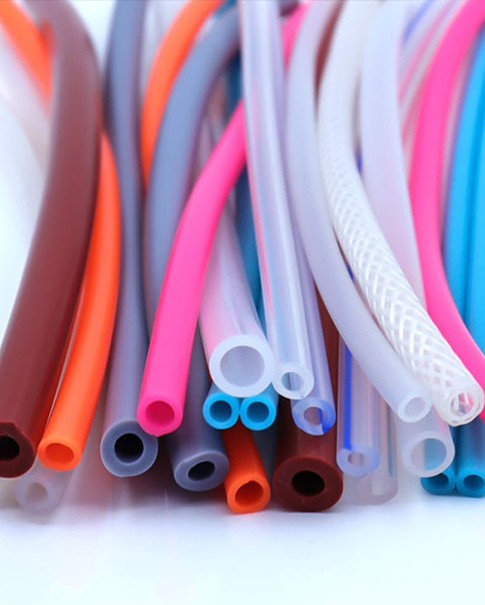

As fuel cell systems, new energy vehicles, and advanced industrial equipment continue to evolve, hose selection is becoming more than a question of flexibility and temperature resistance. Fluid compatibility, chemical stability, cleanliness, and long-term durability can all influence the reliability of a fluid transfer system.
This is particularly important when a hose is exposed to fuels, oils, coolants, aggressive chemicals, or other demanding media. While standard silicone hose offers excellent flexibility and temperature performance, it may not be the best choice for every fluid-handling application.
This is where a properly engineered lined silicone hose fuel cell hose can provide an important advantage. By combining a flexible silicone outer structure with a more chemically resistant inner lining, lined hose construction can help address applications where conventional silicone alone may have limitations.
For engineers, OEMs, and industrial buyers looking for a special use silicone hose, understanding the relationship between hose material, transported media, operating conditions, and application requirements is essential.
A special use silicone hose is designed for applications where a conventional silicone hose may not provide all the required performance characteristics. Silicone is widely used because of its flexibility, temperature resistance, weather resistance, and suitability for many demanding environments. However, different applications plac可以e different stresses on a hose. A hose used for coolant circulation, for example, may have very different requirements from one handling fuel, oil, aggressive chemicals, or fluid systems associated with fuel cell equipment.
Specialized hose construction allows manufacturers to modify the hose according to the operating environment. Depending on the application, this may involve:
chemically resistant inner liners
reinforced hose structures
high-temperature silicone compounds
fuel-resistant materials
aramid or other reinforcement layers
specialized geometries and customized dimensions
For buyers, the key point is that hose selection should begin with the application and media, rather than simply choosing a silicone hose based on temperature range.
A hose is continuously exposed to the medium flowing through its inner surface. If the hose material is not compatible with that medium, several problems may occur over time. Chemical exposure can affect a hose through swelling, softening, hardening, permeation, surface degradation, or loss of mechanical properties. In a critical system, even a small change in hose performance can eventually contribute to leakage, contamination, maintenance requirements, or premature replacement.
A chemical resistant hose therefore needs to be selected according to the actual chemical environment.
Important questions for engineers and purchasing teams include:
What fluid or gas will pass through the hose?
Is the medium fuel-, oil-, coolant-, solvent-, acid-, or alkaline-based?
What temperatures will the hose experience?
Is the system exposed to pressure or pressure cycling?
Is low contamination or low extractables important?
Will the hose experience ozone, UV exposure, abrasion, or vibration?
Does the application require a flexible hose structure or a highly reinforced design?
There is no single hose material that is ideal for every chemical environment. Material compatibility should always be evaluated against the actual operating conditions.
One of the main advantages of lined hose construction is that different materials can perform different functions. The outer silicone layer can provide flexibility, environmental resistance, and the mechanical characteristics required by the hose design. Meanwhile, the inner lining can be selected to provide improved resistance to the specific media flowing through the hose.
This creates a material combination that can be useful in applications where standard silicone would not be the preferred solution. For example, Rainbow Manufacturing produces fluorosilicone-lined and fluororubber-lined hose constructions for applications requiring greater resistance to fuels, oils, corrosive chemicals, and coolants. The company's product information specifically positions the fluororubber-lined construction as a solution for demanding industrial and automotive environments.
The basic concept is relatively straightforward:
Outer silicone layer: Provides flexibility and resistance to environmental conditions.
Reinforcement layer: Helps provide the mechanical strength required by the application.
Inner chemical-resistant lining: Creates a more suitable fluid-contact surface for demanding media.
This layered approach can be especially valuable when engineers need both the flexibility of silicone and greater resistance to the transported medium.
A fuel cell power system may include different circuits for cooling, air management, fuel-related processes, and other fluid-transfer functions. The hose material therefore needs to be selected according to its specific position within the system rather than treating the entire fuel cell as a single application.
A fuel cell hose may need to balance several factors at the same time, including temperature resistance, flexibility, chemical compatibility, cleanliness, pressure resistance, and long-term stability. Rainbow Manufacturing has developed silicone hose solutions for hydrogen-powered fuel cell applications, including hoses for thermal management, fuel supply, and air intake systems. The company also offers lined silicone hose constructions for fuel cell power systems.
For engineers working on fuel cell equipment, the question is not simply whether silicone can withstand the operating temperature. The more important question is whether the complete hose construction is appropriate for the specific fluid, gas, temperature, pressure, and cleanliness requirements of the system.
The application range of lined silicone hoses extends beyond fuel cell equipment.
Fuel and oil can be challenging media for conventional silicone hose materials. A chemically resistant inner lining can help create a more suitable barrier between the transported medium and the silicone structure. Potential applications include fuel-handling systems, automotive equipment, power systems, and other fluid-transfer assemblies where fuel or oil compatibility is important.
Thermal management is increasingly important in modern transportation and energy systems. Hoses may be exposed to water-based coolants, glycol mixtures, additives, or corrosion inhibitors. A hose used in such systems must be evaluated not only for temperature but also for long-term compatibility with the actual coolant formulation. This is particularly relevant to fuel cell and electrified power systems, where thermal management plays an important role in maintaining stable operating conditions.
Industrial fluid systems may involve acids, alkalis, solvents, oils, or other aggressive media. In these applications, chemical resistance is often one of the first criteria considered during hose selection. A chemical resistant silicone hose with an appropriate inner lining can be considered when the system requires flexibility together with improved media resistance.
Choosing between standard silicone and a lined construction should be based on the actual operating environment.
| Consideration | Standard Silicone Hose | Lined Silicone Hose |
|---|---|---|
| General flexibility | Excellent | Excellent |
| Temperature resistance | Strong | Strong, depending on construction |
| Fuel exposure | Application dependent | Better suited to demanding fuel environments |
| Oil exposure | Application dependent | Improved with suitable lining |
| Chemical resistance | Depends on compound | Enhanced through specialized inner lining |
| Fluid compatibility | Must be evaluated | Must still be evaluated against the specific medium |
| Complex applications | Suitable for many general uses | Better suited to specialized requirements |
The table should not be interpreted as meaning that a lined hose is automatically suitable for every chemical or fuel. Compatibility always depends on the actual lining material, fluid composition, concentration, temperature, pressure, and exposure time. The advantage of a lined construction is that it gives engineers another material strategy when standard silicone does not provide the required level of media resistance.
For OEMs and industrial buyers, selecting the right hose should be approached as an engineering decision rather than simply a purchasing decision.
Start with the exact fluid or gas. Instead of simply specifying "chemical," provide the actual medium whenever possible. For example, identify the fuel, coolant, oil, solvent, chemical solution, or gas involved.
Temperature can significantly influence material performance. Both continuous operating temperature and short-term peak temperature should be considered when evaluating a fuel cell silicone hose or industrial chemical hose.
The hose may experience internal pressure, pressure fluctuations, bending, vibration, compression, or repeated movement. If the application involves higher mechanical loads, reinforcement may be necessary.
Some applications are particularly sensitive to contamination, volatile compounds, or fluid permeation. Fuel cell systems are a good example because the hose is part of a larger system in which material cleanliness and compatibility may be important considerations.
A hose may be exposed to ozone, UV radiation, heat, abrasion, engine vibration, or limited installation space. The best hose is therefore not necessarily the one with the highest temperature rating. It is the one whose complete construction matches the actual installation environment.
Industrial hose applications often require more than an off-the-shelf tube. Dimensions, hose geometry, reinforcement, lining material, connection design, and other requirements may need to be considered together.
For this reason, early technical communication with the hose manufacturer can help reduce the risk of selecting an unsuitable material combination.
For B2B buyers, the supplier's role extends beyond producing a piece of flexible tubing.
A suitable supplier should be able to understand the relationship between:
transported media
hose material
operating temperature
pressure requirements
reinforcement
installation conditions
dimensional requirements
application-specific performance expectations
Rainbow Manufacturing focuses on silicone hose solutions for automotive, fuel cell, industrial, and other specialized applications. Its product range includes fuel cell silicone hoses, vehicle silicone hoses, special-use silicone hoses, and other customized hose solutions.
For buyers who are not sure whether they need a standard silicone hose, a chemical resistant hose, or a lined construction, discussing the application requirements with the manufacturer before placing an order can be a practical first step.
Not necessarily for every application. A lined hose is useful when the transported medium creates chemical or compatibility requirements that standard silicone may not adequately address. For general coolant, air, or other suitable applications, standard silicone may already be sufficient.
A Viton®-lined silicone hose can be considered for applications where resistance to fuels, oils, coolants, and certain aggressive chemicals is important. The exact suitability depends on the specific medium and operating conditions.
Yes, specialized lined silicone hose constructions can be used in fuel cell-related applications. However, the hose must be selected according to the particular fluid or gas circuit, temperature, pressure, cleanliness, and compatibility requirements.
Begin by identifying the transported medium, concentration, operating temperature, pressure, exposure time, and mechanical environment. These factors should then be matched with the hose's inner lining and reinforcement structure.
Specialized silicone hose manufacturers can develop or manufacture hoses according to application-specific requirements. Dimensions, construction, reinforcement, and other design factors should be discussed with the manufacturer before production.
Selecting a hose for a demanding industrial or fuel cell application requires more than checking whether the material is silicone. The interaction between the inner lining, outer silicone layer, reinforcement, transported medium, temperature, pressure, and installation environment ultimately determines whether the hose is suitable for the application.
For systems exposed to fuels, oils, coolants, or aggressive chemicals, a lined silicone hose fuel cell hose can provide a practical material solution by combining the flexibility and environmental performance of silicone with the chemical resistance of a specialized inner lining.
If you are sourcing a special use silicone hose, evaluating chemical resistant hose options, or developing a fuel cell fluid-management system, Rainbow Manufacturing can provide application-oriented silicone hose solutions and customization support.
Explore the available hose solutions at rainbow-manufacturing.com and contact Rainbow Manufacturing to discuss your application requirements and find a suitable hose construction for your project.
Looking For A Reliable Business Partner For Your Next Project?

Business Enquiries
+86 15160066997