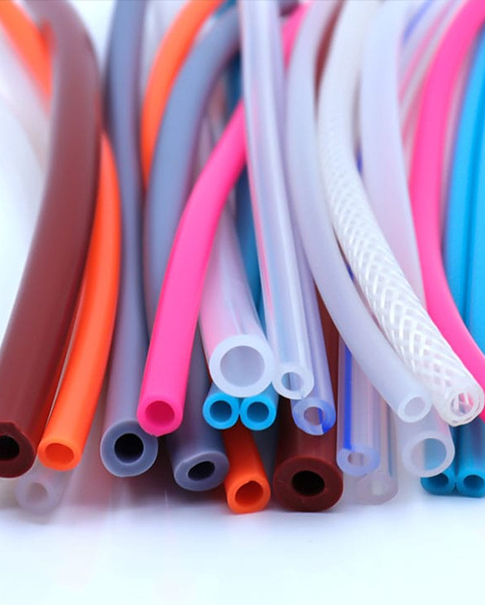
Choosing a silicone hose for fuel or chemical service starts with the fluid, not the product label. A hose compatible with a particular gasoline blend may be unsuitable for a cleaning solvent, while a hose described as chemical-resistant may not be suitable for fuel transfer.
The distinction is one of scope. Fuel resistance addresses compatibility with specified fuels. Chemical resistance is a broader term covering compatibility with specified substances, which can include fuels,...
When selecting a hose for automotive, industrial, or fluid transfer applications, durability is one of the most important factors to consider. A hose must withstand operating temperatures, pressure fluctuations, vibration, and environmental exposure without losing its flexibility or structural integrity.
So, which lasts longer: a custom silicone hose or a universal hose? The answer depends on the hose material, reinforcement structure, operating environment, and how accurately the hose fits the...
Choosing a hose for an automotive cooling system involves more than matching its diameter. Heater hoses and radiator hoses both carry coolant, but they connect different components and serve different roles. Similar materials or dimensions do not automatically make them interchangeable.
A silicone heater hose carries coolant through the vehicle’s heating circuit. A radiator hose carries coolant between the engine and radiator. Understanding what these names describe—an...
A fuel cell silicone hose may meet dimensional, temperature, and pressure requirements while still releasing substances that affect system cleanliness. For OEM purchasing teams and fuel cell engineers, evaluating this risk requires more than relying on a supplier’s low-extractables claim.The key is to understand what was tested, how the test was conducted, and whether the results are relevant to the finished hose and its intended application. This guide explains how to evaluate mat...
An air intake hose that matches the connection diameter may still be unsuitable for the intended engine layout. Incorrect bend geometry, limited installation clearance, or incompatible materials can create fitment problems and premature deterioration. For OEM purchasing teams and automotive engineers, selecting a suitable silicone air intake hose requires more than checking its end diameters.
This guide explains where these hoses are used, how OEM and performance project requirements diff...
Choosing a custom silicone hose manufacturer is an important decision for OEM companies, automotive parts suppliers, industrial equipment manufacturers, and product developers. A silicone hose may look like a simple component, but its performance depends on several factors, including material formulation, reinforcement structure, operating temperature, pressure requirements, and manufacturing accuracy.
Not every silicone hose supplier has the engineering experience or production capabilities to...
Selecting a suitable fuel cell silicone hose is an important consideration when designing hydrogen-powered vehicles and fuel cell systems. The hose must maintain reliable performance under specific temperature, pressure, and environmental conditions while meeting the material compatibility and cleanliness requirements of the application. For automotive manufacturers, fuel cell system integrators, and industrial equipment suppliers, the right hose selection can help improve system reliability an...
Selecting a hydrogen fuel cell hose involves more than matching dimensions and material types. Different fuel cell circuits require hoses suited to their specific media and operating conditions.
In this article, “hydrogen hose” is used as a shortened term for “hydrogen fuel cell hose.” It refers to silicone hoses used in hydrogen fuel cell systems for applications such as fuel supply, air intake, and thermal management. It does not refer to every type of ho...
Selecting CAC silicone hoses for heavy-duty trucks involves more than matching dimensions. Inadequate reinforcement, insufficient temperature resistance, or mismatched pressure ratings can lead to premature hose failure, air leaks, and fitment issues. These problems increase replacement costs and complicate sourcing for OEM purchasing teams and parts distributors. For engineers, they can also make it harder to meet application-specific performance and installation requirements.
Ho...
Universal silicone couplers are widely used in automotive cooling systems, turbocharger piping, intercooler connections, and other fluid or air transfer applications. Their flexibility, temperature resistance, and reinforced construction make them a practical choice for connecting pipes in demanding operating environments. However, even a high-quality silicone coupler needs proper inspection and maintenance to maintain reliable performance over time.
For vehicle owners, maintenance technicians,...
Choosing a reinforced silicone hose for industrial machinery involves more than comparing reinforcement materials. A hose designed to resist collapse under vacuum may not be the right choice for a pressurized system, while a hose suitable for high-temperature service may not meet the installation's flexibility or routing requirements.
Wire, glassfiber, and aramid reinforcement serve different design purposes. Understanding their structural differences helps purchasing teams narrow down su...
Choosing a food grade silicone hose requires more than checking whether it is suitable for food contact. Different processing applications involve different liquids, temperatures, pressures, and cleaning procedures. Selecting the wrong hose can lead to compatibility issues, installation problems, or premature replacement.
This guide covers common food processing applications, key specifications for beverage transfer, and the compliance requirements buyers should check before purch...