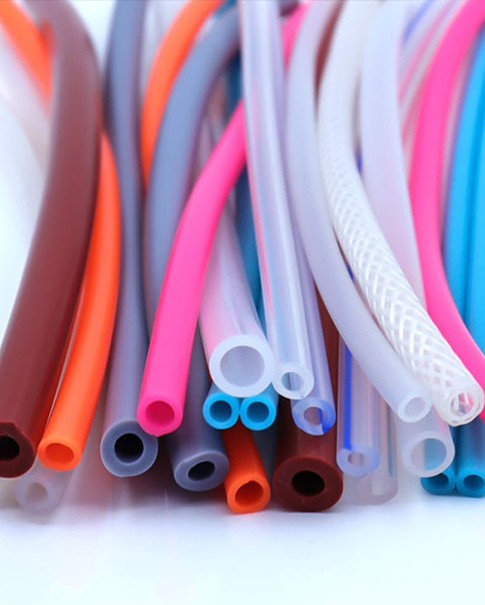
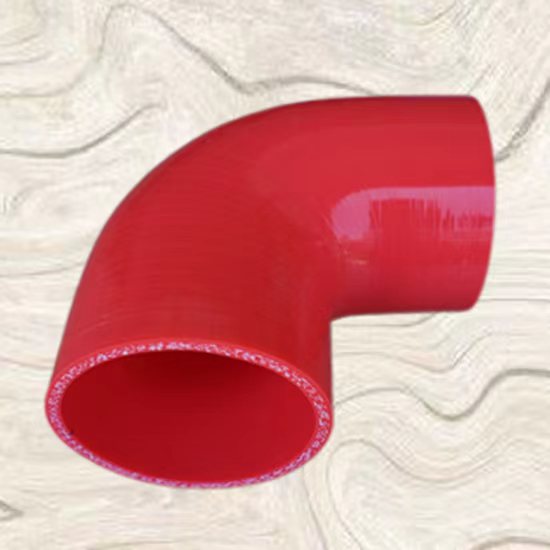
Looking for a hose that combines flexibility with serious strength? A polyester reinforced silicone hose delivers exactly that. The polyester braid embedded inside the silicone wall provides exceptional pressure resistance, preventing the hose from expanding or bursting under stress. You get the best of both worlds: the temperature tolerance and flexibility of silicone hose, plus the durability of reinforced construction.
What makes this combination so practical? Standard rubber hoses can crack...
Engineered from premium silicone and reinforced fabric, our Silicone Turbo Hose delivers exceptional durability in extreme engine environments. It resists hardening, cracking, ozone, sunlight, and chemicals while maintaining flexibility across a wide temperature range.
Designed for turbocharger systems in trucks, buses, autos, and railway engines, this hose connects the turbocharger to the intake system. When used with stainless steel clamps, it allows for custom bends and lengths. Note: For in...
As an IATF 16949 and ISO 9001 certified silicone hose manufacturer since 2006, RAINBOW specializes in performance silicone hoses, tubing, fuel cell hoses, and molded parts for automotive, railway, healthcare, and industrial applications. Our manufacturing expertise spans from turbocharger and CAC hoses to complex custom shapes, serving industries ranging from agricultural machinery to electronics. With nearly two decades of experience, we deliver consistent quality and engineering excellence for...
Rainbow has a type of FKM lined silicone hose, which are excellent in oil, gas, fuel and heat resistance.
It is PFAS free hose, specifically designed for use on hydrogen fuel cell systems.
The FKM lined silicone hose can meet the unique requirements of the anode, cathode and cooling circuits in fuel cell applications.
The specially developed lining material contains an extremely low proportion of volatile compounds, which helps prevent interference with the membranes and sensors wit...
Ever found yourself stuck picking between a universal silicone coupler and a vehicle-specific one? The answer depends on your needs. Universal options are cheap, flexible, and easy to find. They also leak, limit pressure, and fit poorly. Picture a DIYer chasing a boost leak on a Saturday. That verdict shapes everything.
Why Love Universal Silicone Couplers
Universal Silicone Coupler Flexibility
You can cut a universal silicone coupler to any length you need. That mat...
Silicone hoses play a critical role in hydrogen fuel cell systems by providing excellent high-temperature resistance, flexibility, durability, electrical insulation, and lightweight performance. These advantages help improve the safety, efficiency, and service life of fuel cell systems, especially in demanding applications where components must withstand continuous operation, vibration, and thermal cycling.When selecting a hose material for hydrogen fuel cell applications, material compatibility...
As fuel cell systems, new energy vehicles, and advanced industrial equipment continue to evolve, hose selection is becoming more than a question of flexibility and temperature resistance. Fluid compatibility, chemical stability, cleanliness, and long-term durability can all influence the reliability of a fluid transfer system.
This is particularly important when a hose is exposed to fuels, oils, coolants, aggressive chemicals, or other demanding media. While standard silicone hose offers...
Hygienic processing facilities in food, beverage, dairy, and nutraceutical manufacturing depend heavily on the integrity of their flexible transfer lines. A single material failure can result in batch contamination, unexpected downtime, regulatory penalties, and significant brand damage. Among the available elastomer options, the food grade silicone hose remains the benchmark for critical transfer points where purity, thermal stability, and cleanability are non-negotiable.
Designing or up...
Yes. IATF 16949, the global standard for automotive quality management systems, is a specific certification required for automotive fuel cell silicone tubing. It ensures stable production, controlled processes, and consistent product quality, which are critical for safety, performance, and regulatory approval.
Key Takeaways
Fuel cell silicone tubing must meet strict certifications like ISO 9001, IATF 16949, and SAE J2643 to ensure quality and performance.
Regulatory standards such as...
Modern fluid and air routing systems are rarely as simple as connecting two pipes in a straight line. Automotive cooling systems, turbocharger assemblies, charge air systems, industrial equipment, and other mechanical applications often have limited installation space, different connection diameters, and changing pipe directions.
This is where a well-designed universal silicone coupler can make a practical difference. Rather than forcing rigid pipes into an unsuitable position, silicone coupler...
When you build high-horsepower engines, OEM rubber lines harden, expand, and fail under intense heat. Upgrading to a vehicle silicone hose kit from Samco Sport, Mishimoto, or HPS Performance solves this problem fast. Multi-ply reinforced silicone provides awesome pressure retention, superior thermal stability, and ultimate cold flexibility to protect your aggressive tuned ride forever.
Top Vehicle Silicone Hose Upgrades for Power
Radiator and Coolant Hose Kits
Factory coolant lines...
Upgrading to silicone hoses optimizes engine cooling and peak performance. An automotive silicone hose resists thermal degradation between -50°C and +220°C. Superior pressure retention in silicone hoses eliminates expansion under boost while simplifying routine maintenance. This reliable upgrade protects your cooling system during demanding driving and preserves overall engine component lifespan.
Key Takeaways
Silicone hoses withstand extreme engine temperatures without cracking...